Εμφάνιση αναρτήσεων με ετικέτα GREECE TODAY. Εμφάνιση όλων των αναρτήσεων

Πέμπτη 27 Σεπτεμβρίου 2012

"ARE GREEKS EUROPEANS?" BY PETER ECONOMIDES

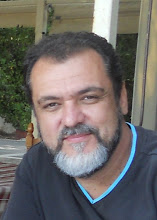
Peter Economides

Europa and the bull


It took me a while to answer this question. Not because it was a difficult question to which I did not have an answer. But simply because it had been asked.

The person asking was a known journalist from Süddeutsche Zeitung, one of the most widely read, and most highly respected, German newspapers.

Isn’t Europe a Greek name? The woman abducted by Zeus in the form of a white bull?

Isn’t Greek thought at the heart of European civilization? Perhaps we don’t have to go as far as claiming, as did Giscard d’Estaing that “Europe without Greece would be like a child without a birth certificate.” But where did we go wrong?Apart from the genesis of Europe – in name or in spirit – isn’t Europe a mosaic? A beautiful, multicolored mosaic in which each piece plays a role and the whole is bigger than each of its individual pieces.It was a big question this journalist was asking me.

Much, much bigger than I thought.Of course Greeks are Europeans.Perhaps not, however, in a world dominated by productivity, efficiency, balanced books and the Protestant ethic. But is this all that Europe is about?

Greeks are under pressure. To become “good Europeans.” And what it means to be a good European is dominated by the Northern European definition. This definition may move sometime to the more encompassing idea with which the European Union was initially intended. But no matter what, it is up to Greeks to carve out a meaningful role within Europe and the world. And Greeks can only do this by being in touch with their essential DNA. If Greeks lose this DNA, then Greeks lose themselves. Full stop.


Let me make one thing clear. I am not talking about physiological DNA. This page is not the place to attempt to trace back Greek lineage to the ancients.
I am talking about the essential concept of Greece. The spirit with which Greeks live their lives. The stuff that defines the “Greekness” of Greece. About what makes this nation tick. What makes us get up in the morning.

I think the world understands what this is. It’s called life. And the amazing love that Greeks have for life. It was present in ancient Greece. The love of humanity that gave rise to democracy. The love of beauty that gave rise to sculpture. The love of peace that gave rise to the Olympic Truce. The love of knowledge which gave rise to science. The love of discovery that gave rise to philosophy. The love of wisdom that shines from the Acropolis in Athens.

Life. This is Greek knowhow. And when we harness its creative power we will reverse our image as a nation with a zest for life and an aversion to productivity. We need to utilize our “life knowhow” and transform it into creative enterprise that will be valued by the world. This is how we can reignite our economy. By doing things that Greeks can excel at. By creating sustainable competitive advantage based on the uniquely Greek knowledge – and love – of life.

Peter Economides is a brand strategist with a global perspective. He has lived on four continents doing work that has impacted brands and consumers almost everywhere. He has learned from the leaders of some of the world’s best brands. He is the owner and founder of Felix BNI.


Source: www.greekreporter.com


Σάββατο 26 Μαΐου 2012

PETER FRANKOPAN (NYT): BANKERS AT THE GATES

FEW Greeks have a good word to say about the European banking system these days. They believe it’s the real reason for their current crisis, having pushed easy money on their politicians and now demanding a pound of financial flesh.
It was the same story 800 years ago. The men of the Fourth Crusade, who had originally set off to fight for Christianity in the Holy Land, found themselves instead ransacking Constantinople, the capital of the Greek-speaking Byzantine Empire, because of enormous debts that had been racked up in the West.
The way Europe has behaved over the current Greek crisis is scarcely less shameful than the way those crusaders behaved all those centuries ago. If nothing else, that dark spot on the West’s historical record should be a warning to the bankers and politicians who would rather watch Greece fall apart than take responsibility for their own profligacy.
Greece may be on Europe’s periphery today, but in the 12th century Constantinople was the gateway to a lucrative trade in spices, silks and luxury goods coming from the east. This trade had made fortunes for men across Europe — as the economies of Greece, Spain, Portugal and Italy have done over the last two decades.
Traders from places like Venice, Genoa and Pisa in the late 12th century managed to win for themselves the sort of advantages and loopholes in Constantinople that bright young fund managers would kill for today: they negotiated positions that allowed them to undercut local traders, alongside smart commercial treaties that let them minimize or even sidestep their taxes. As with modern Greece, this led to a flow of cheap foreign capital into the markets.
Around 1200, though, things went sour. A sharp contraction of trade in the Byzantine Empire was exacerbated by wild overspending by Venice, the medieval equivalent of a European central bank.
Almost overnight there was a switch from the easy money, where everyone was a winner, to the dark arts of debt collecting. As with Athens since the financial crisis took hold, it became clear that no one would take responsibility for lending too much, for basing forecasts on only best-case scenarios.
Someone would have to cover the losses, and Venetian merchants were adamant that it would not be them. Constantinople and the Greek-speaking empire, riven by internal divisions, was the obvious mark.
Eventually, one of the rival factions in Constantinople offered a deal with Venice: in exchange for covering the Most Serene Republic’s losses, the faction would receive Venetian military muscle to secure its claim on the Byzantine throne. Venice jumped at the deal.
But Constantinople had vastly underestimated the size of its new debt obligations — and overestimated the stabilizing effect of Venetian arms. Financial obligations mounted abroad, while political paralysis deepened at home.
Everyone from the pope to the kings of Europe knew about the pressure building against Constantinople. One Western delegation after another told the Greeks to get their act together — or, to put it more bluntly, to pay up. The crusaders, under the sway of Venice, lay siege to the city.
Eventually, the Westerners had enough of the procrastination. Seizing their chance, the knights stormed Constantinople. What happened next was a disgrace: the prize assets of the empire were looted at will, seized as collateral by a mob that behaved with no concern for the city’s inhabitants, its culture or its history.
According to one account, prostitutes danced on the altar of St. Sophia, the most beautiful church in the whole of Christendom. Palaces, gardens and holy places were ransacked, with treasures taken off by the cartload. The great collections of relics held in the imperial capital were seized by the Westerners to adorn cathedrals and churches across Western Europe; to this day four bronze horses, stolen from the hippodrome of Constantinople, stand atop the Cathedral of St. Mark in Venice.
Judging the Greeks fiscally and politically incompetent, the conquerors appointed a regent. Baldwin of Flanders, crowned emperor of Constantinople in 1204, was a classic I.M.F.-style appointee: a safe pair of hands, someone with whom other Western leaders could do business.
Meanwhile, the noblemen leading the Crusade, many of whom had brought ruin in the first place with their reckless promises, took control of whole areas of the city and empire for themselves — a classic case of getting in at rock bottom. (So keep an eye on those bankers and their villas in the Aegean; you don’t need to be a historian to know it is a buyers’ market.) The new Latin Empire of Constantinople lasted just 50 years before the Greeks returned to power.
The story is the same as then: cheap money brings handsome rewards but guarantees crisis, while the pain falls solely on the Greeks. Constantinople and Athens may have become addicted to easy money, but the West was their dealer. 

Peter Frankopan is the director of the Center for Byzantine Research at Oxford and the author of “The First Crusade: The Call From the East.” 

Source: www.nytimes.com